Author: Joe Sarnicola
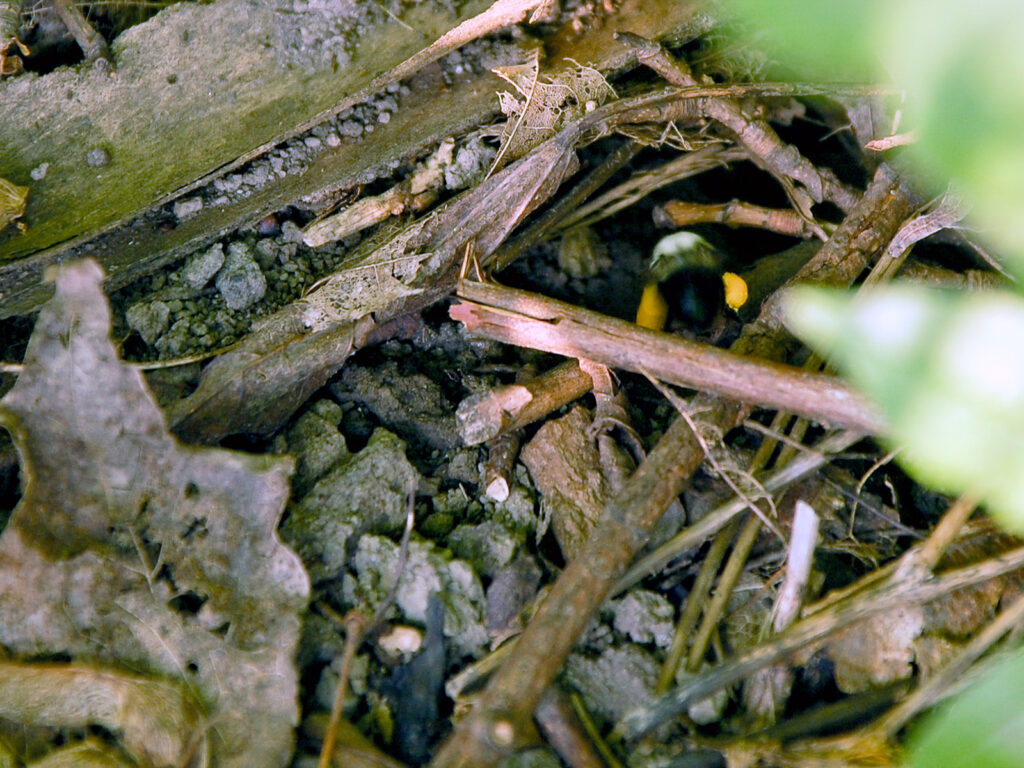
Photo by Janet Allen.
Now that we have a better understanding of the differences between dirt and soil, we should probably examine what is happening in our soil a little more closely. When we look at our gardens, we probably see flowers, shrubs, trees, maybe a sandy spot for ground bees, but are we thinking about what is happening under the surface? If not, we should be.
The relationships between plants, the organisms that live in the soil, and the biological processes taking place is called the soil/food web. This interaction is described as happening in layers or levels. Scientists describe these levels as trophic, having to do with food and nutrition.
The first level consists of the Photosynthesizers. (We call them plants.) Plants convert the energy from the sun into carbohydrates, which they use for growth and other functions, but some of them are stored in the roots where they can be accessed by organisms, such as fungi and bacteria, living in the soil. As these tiny organisms die off or are eaten, they release nutrients which the plants in turn can take up through their roots.
In the next level are the Decomposers, which include the bacteria and fungi we just mentioned plus other organisms. By storing nutrients and minerals in their cells after feeding on waste products of the plants, when these organisms die the nutrients are recycled and used by the plants, instead of being washed away by rain or lost by erosion, The fungi, which are an important class of decomposers, grow in threads called hyphae (from the ancient Greek word for “web.”) They feed on dead or decaying organic matter, such as leaves, and fallen branches, which they convert into rich, usable soil.
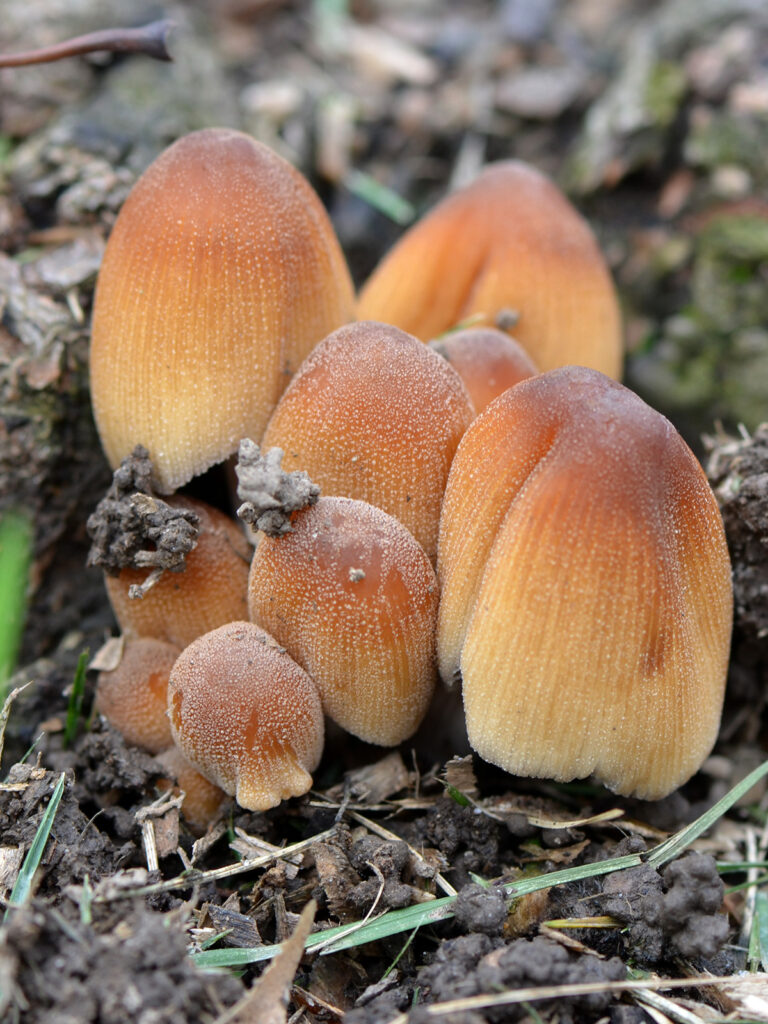
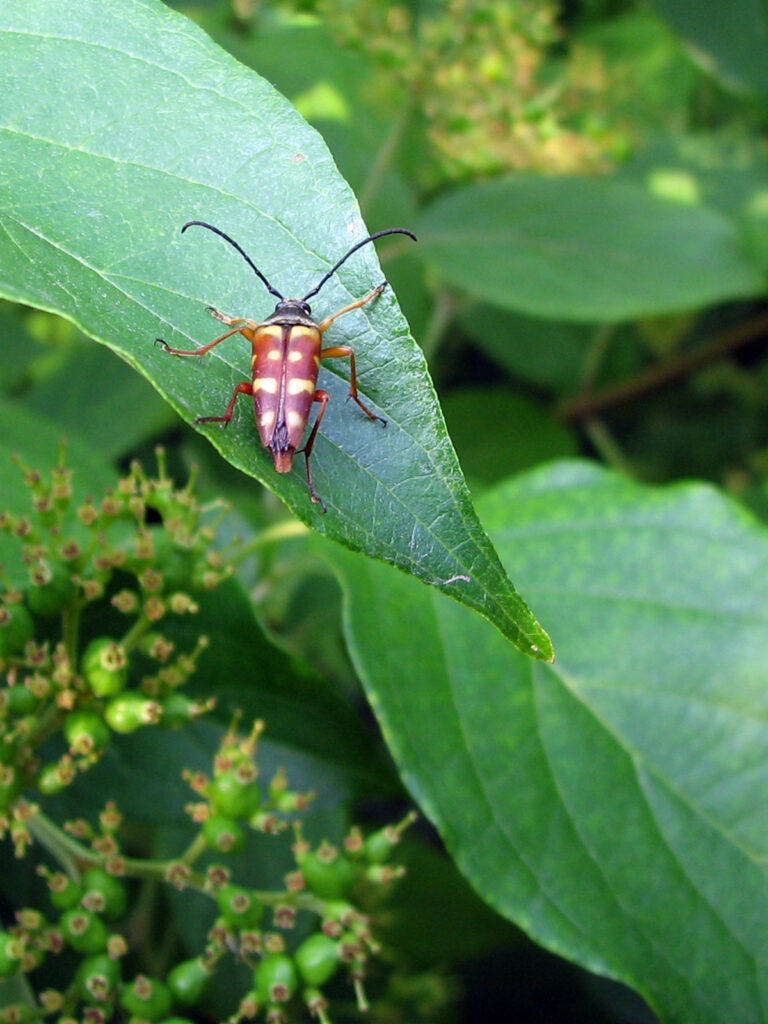
Photo by Janet Allen.
The next level contains the Shredders, Predators, and Grazers. These primarily microscopic organisms feed on bacteria and release nitrogen and other compounds into the soil. Nematodes are wormlike creatures that feed on bacteria, fungi, and even other nematodes.
The fourth level contains larger organisms and creatures such as arthropods, ranging from beetles, arachnids (spiders), and centipedes, along with worms. These creatures burrow in the soil, leaving organic material behind as casting, or they consume bacteria and fungi on the surface.
In order to fulfill their role in the soil/food web, these creatures need air, water, food, and shelter, just like all other living things, and a minimally disturbed soil in which to work. Soil that is too dry cannot supply the water that is needed. Soil that is too compacted cannot hold the necessary amounts of oxygen. A lack of these two elements means less food for the organisms, so they die out. If soil is heavily tilled, the shelter aspect is disrupted. If soil needs to be worked, a garden fork is a much less disruptive tool, in fact it can actually aerate the soil and be beneficial.
If a garden is overgrown with weeds, it is possible the soil/food web is out of balance. Ample amounts of bacteria are needed, which will attract predators. If there aren’t enough predators the weeds will thrive on the nitrogen that the bacteria release. If there are sufficient predators, they will release ammonium, which inhibits the growth of weeds, and balance is maintained.
To have a healthy soil/food web and overall ecosystem, plant a variety of native plants, each which affect the soil differently. Some have deep root structures that reduce soil compaction and allow oxygen which is needed by aerobic bacteria and fungi. And just as native plants have coevolved with pollinators and other wildlife, the same has occurred with the life under the soil. This process helps to keep everything balanced above and below the soil and will naturally crowd out the weeds.
And, oh, yes, leave the leaves as much as possible, which provide food and shelter for the abundant life in and under our gardens.

About the author:
Joe Sarnicola is a writer and native plant gardener based in Auburn, New York, and he is a member of the Habitat Gardening of Central New York Chapter Wild Ones.