Author: Joe Sarnicola
For people who are new to native plant gardening it can seem a bit overwhelming at first. Latin names (anyone remember taking Latin in high school? Lot of good it did me.), bushes and shrubs are not exactly the same thing, not to mention ecozones and ecosystems, and then there is sandy, silty and loamy soil. Well, you get the idea. So where do we start?
I would suggest choosing the purpose of your garden. Do you want to replace invasive plants with natives, do you want to attract wildlife, use less water, connect with nature, or any combination of these and other possibilities?
In my case, I started small, because my first goal was to attract pollinators. I set aside a space about 6’ by 8’ and I planted common milkweed (Asclepias syriaca),Joe-pye Weed (Eutrochium purpureum), sneezeweed (Helenium autumnale), hoary mountain mint (Pycnanthemum incanum), and Early Sunflower (Heliopsis helianthoides). I bought them at The Butterfly Effect in Geneva, NY.
Being the first year the plants were the soil, the plants were early in their development, but I did see bees and the occasional Monarch butterfly visiting them. I’m hoping to attract more visitors next season. My soil was heavy clay, so I amended it lightly with a quality topsoil, which the plants seemed to like. Not a single casualty, so I must have done something right.
Being the first year the plants were the soil, the plants were early in their development, but I did see bees and the occasional Monarch butterfly visiting them. I’m hoping to attract more visitors next season. My soil was heavy clay, so I amended it lightly with a quality topsoil, which the plants seemed to like. Not a single casualty, so I must have done something right.
I live in Central New York, but wherever you live, it is important to know which Eco-region you live in, to know which plants are native to your area. For example, a plant native to Florida would not do well in Northern New York State. You can find this information at homegrownnationalpark.org and wildones.org or just search for an online eco-region locator.
According to the Conservation Foundation, native plants are the plants that have been growing in an area prior to European settlement. They have evolved or adapted to a local environment and are an important part of local habitats and ecosystems. They are the most sustainable plants for a specific area.
One very important aspect of a native garden is planning. How much area do you intend to devote to the plants? How much sunlight does the area receive? What is your budget, and how much time can you commit to planting and maintenance? And you also want there to be some aesthetic value, and by that, I mean the colors of flowers, the types of grasses, a mix of tall and short plants, and so on.
Whatever time you spend planning will be worth it, but you may find you have to modify your design as the garden develops. The Wild Ones website has tips on garden design, plant selection, and much more, both as text and videos, and they offer frequent live and online seminars.
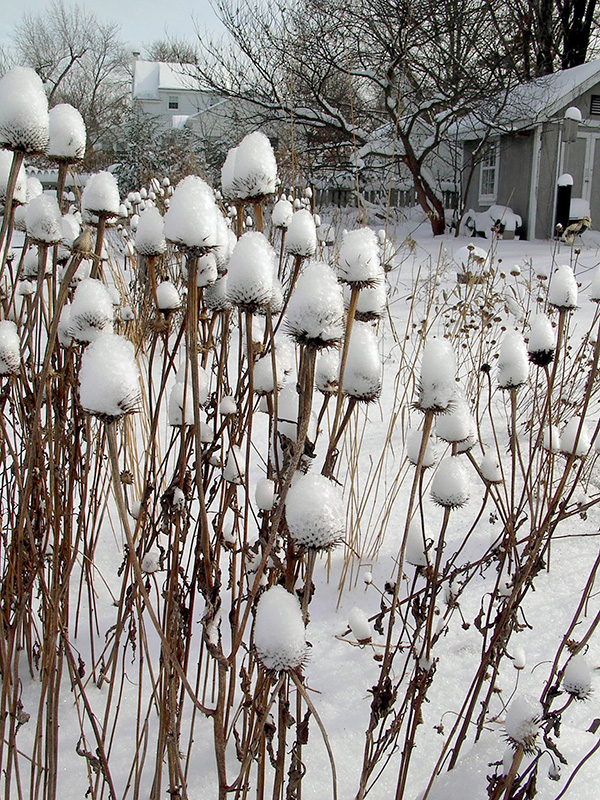
As I am writing this my yard is covered with snow and the temperature is below freezing, but I have been busy planning for an expansion of my garden next year. Do I want to add a bench? Oh, and I know I want an oak tree, and a few bushes that yield berries for the birds, and . . . sorry I have to run, so much planning to do!
HGCNY Wild Ones note:
The above native nurseries and many more can be found in our Native Plant Shopping Guide.
About the author:
Joe Sarnicola is a writer and native plant gardener based in Auburn, New York, and he is a member of the Habitat Gardening of Central New York Chapter Wild Ones.