Author: Joe Sarnicola
As autumn winds blow the leaves off the trees, and there is less light throughout the day, the bright colors of our native flowers begin to fade. Local gardeners know that Central New York winters can bring heavy lake-effect snow, bitter freezes, and unpredictable thaws.
While we might be tempted to clean up our garden beds until they are completely bare, a native plant garden requires a different, more hands-off approach. Preparing your native garden for winter isn’t about tidying up, it is more about providing shelter and food for wildlife and preserving our plants for the next season.
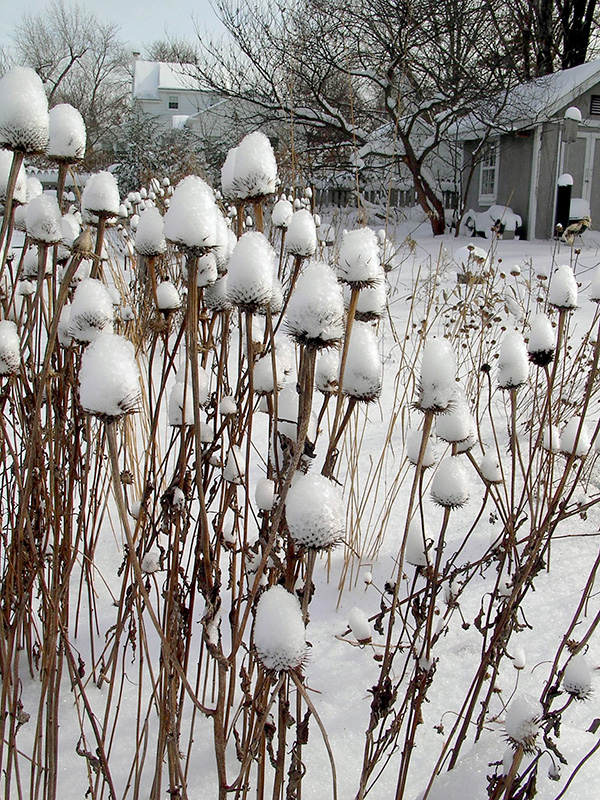
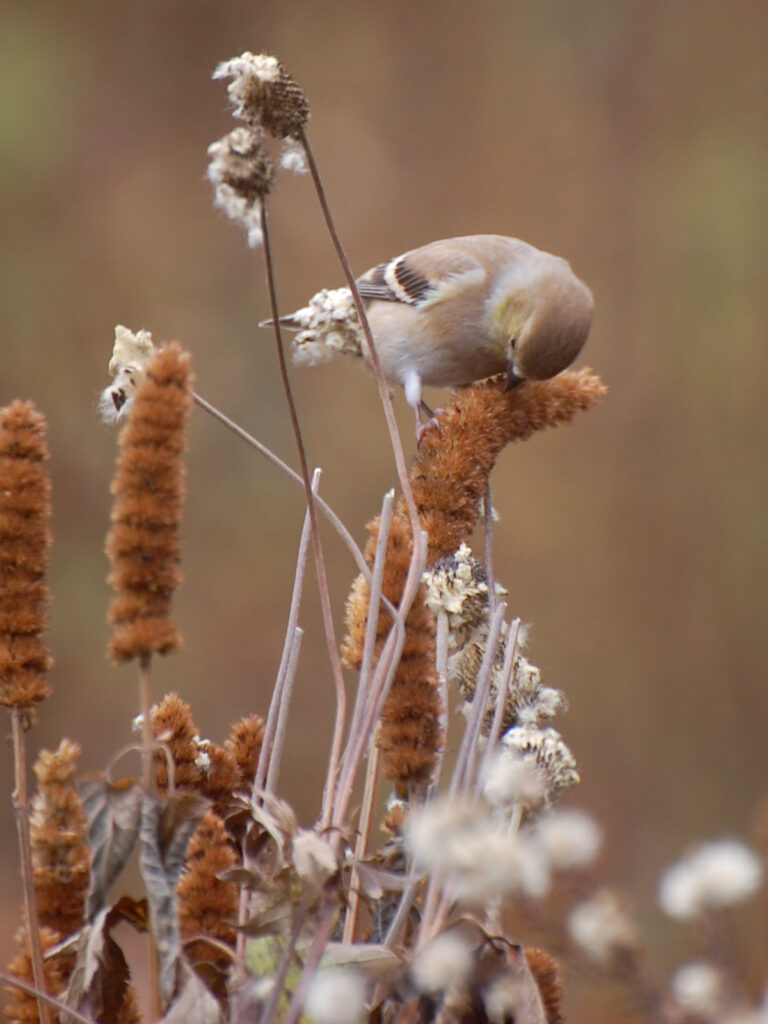
An important concept of winter native gardening is simple: do not cut back perennial stalks. Unlike non-native ornamental gardens that look best manicured, native plants serve a critical ecological purpose when left standing. Hollow stems of plants like Joe-Pye weed, wild bergamot, and elderberry are winter condos for native tunnel-nesting bees and beneficial insects. The dried seed heads of purple coneflower, black-eyed Susans, and sunflowers are vital food sources for overwintering birds like goldfinches and chickadees. Structurally, standing stalks look beautiful catching the snow, adding texture and visual appeal to an otherwise flat landscape.
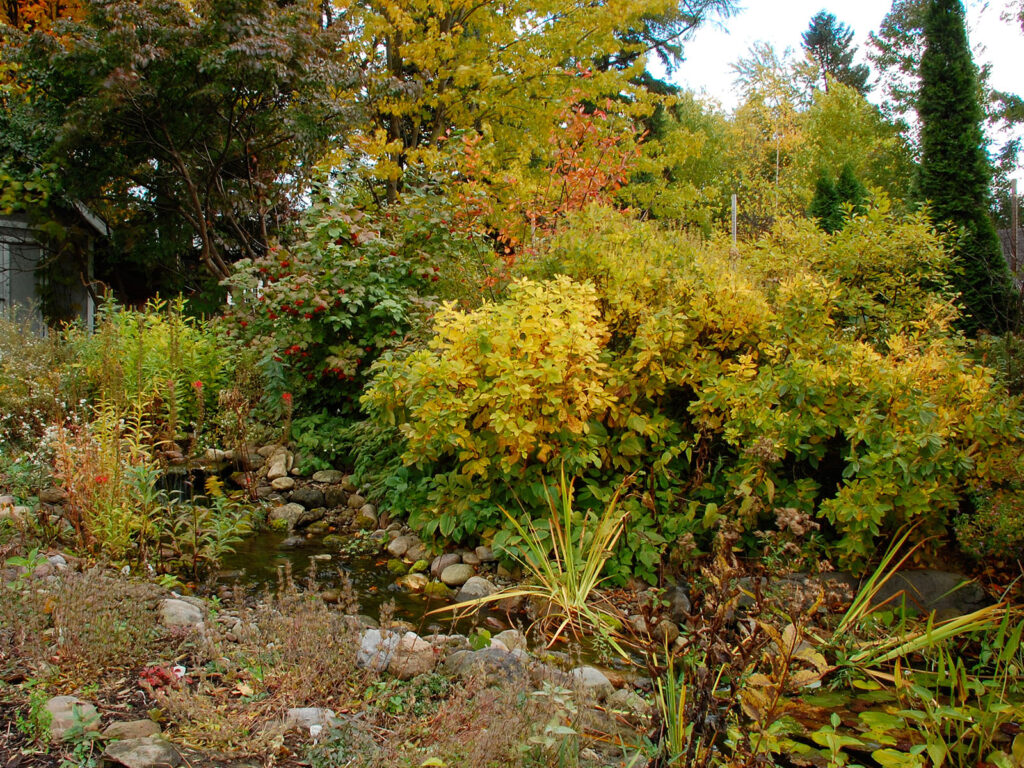
Before you reach for the plastic leaf bags or the loud leaf blower, consider that fallen leaves are nature’s free, premium mulch. A thick layer of leaves mimics the natural forest floor. It insulates plant roots against temperature, preventing the devastating “frost heaving” that can push shallow-rooted plants right out of the frozen ground.
Hidden inside that leaf litter are the cocoons and chrysalises of next summer’s beautiful moths and butterflies. If you throw away the leaves, you throw away the pollinators. And attracting and protecting pollinators is an important part of native plant gardening.
Autumn is an ideal time for planting. The cooler air reduces stress on the foliage, while the soil remains warm enough for root development. Just make sure to water any new additions deeply before the ground hardens for the season and top them with extra leaf mulch.
Winter is also a friend to many native seeds. Species like milkweed, ironweed, and New England aster require a process called cold stratification. Their seed coats need to experience periods of freezing temperatures and moisture before they can germinate.
When the snow finally covers the ground, your native garden will be far from dead. It will be a bustling, quiet sanctuary. By leaving the stalks, saving the leaves, and letting nature take its course, you are actively practicing conservation in your own backyard. When the snow melts and Spring returns, your garden will be ready to become a resilient ecosystem.
To connect with fellow native gardeners, access educational resources, or find a local chapter in your area, visit Wildones.org.
🌱 HGCNY Habitat Hints: Extra insights to help your habitat thrive🌱
Want more practical ideas on managing leaves without losing the habitat they provide or annoying the neighbors? Check out the Wild Ones’ post Lessons With the Leaves. It covers simple ways to keep leaf layers in place, protect overwintering insects, and get the most out of nature’s free mulch in a native garden.
About the author:
Joe Sarnicola is a writer and native plant gardener based in Auburn, New York, and he is a member of the Habitat Gardening of Central New York Chapter Wild Ones.