Author: Joe Sarnicola
Most of us probably think of snags as things that cause a delay or tear our clothing, but in a native garden, snags can be beneficial. A snag in a garden is a standing dead or dying tree that is left in place. If that snag poses a health or safety issue it would have to be cut down or trimmed, so I will only be talking about snags that are not hazardous.
Why would we want a dried up or rotting tree in our yards? Well, just as native gardens serve as mini ecosystems, a snag can be an ecosystem as well. If you have woodpeckers in your area, you have likely seen them visiting snags looking for insects. Snags have been described as “insect buffets” because the insects in them attract many insect-eating birds and animals.
Some birds may use them as a perch and other animals may use cavities in the tree for shelter. Beetles and their larvae live in the tree, and they can serve as food for birds and bats. According to the Audubon Society, “Snags are an essential part of the forest habitat, and they play a crucial role in maintaining the ecosystem’s health and sustainability,” and the Washington Department of Fish and Wildlife call snags “wildlife trees.”
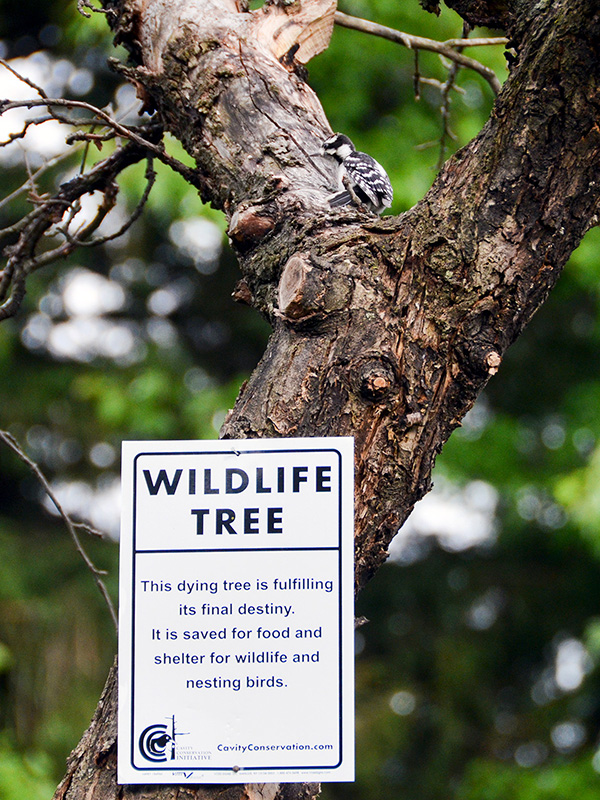
Photo by Janet Allen.
Beyond their function as a nesting site or food source, snags can provide visual interest contributing to the natural look of the property. That can be further enhanced if they act as a trellis for native non-poisonous vines. They also help to sequester carbon, keeping it out of the atmosphere, and another bonus is that snags require no effort on our part. Just let them be.
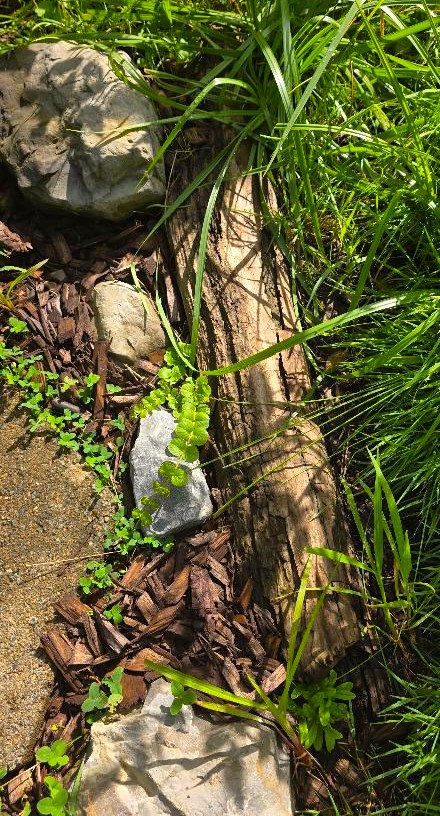
Photo by Joe Sarnicola
Next, we come to the cousin of the snag, the log. When I say log, I don’t mean something that you could carve a canoe out of, just something that is an appropriate size for your garden. I have two in mine, and they are both less than three feet long.
A log in a garden holds moisture which can be leached into the soil during dry periods. As the log rots naturally or with the help of fungi it can become food for adjacent plants and will attract insects that can become food for birds. The area underneath the log will quickly become a home for insects and other creatures that like dark, moist environments.
If you don’t have any fallen trees that may yield a suitable log you may try contacting a local tree service or maybe your local Parks Department. Just be sure the trees are native, and soft woods break down more easily than hardwoods.
Following the direction of my local Cooperative extension, which was to “plant a log,” I dug out a space almost the length of the log and only a few inches deep. Then I put the log in place, packed soil around the bottom couple of inches of it and just left it alone. Depending on local conditions you may find moss or mushrooms growing on the log.
If you don’t already have a log in your garden, consider placing one in an appropriate spot. The level of biodiversity in your garden will increase, and you will be taking another step that helps the environment and the wildlife in your area.
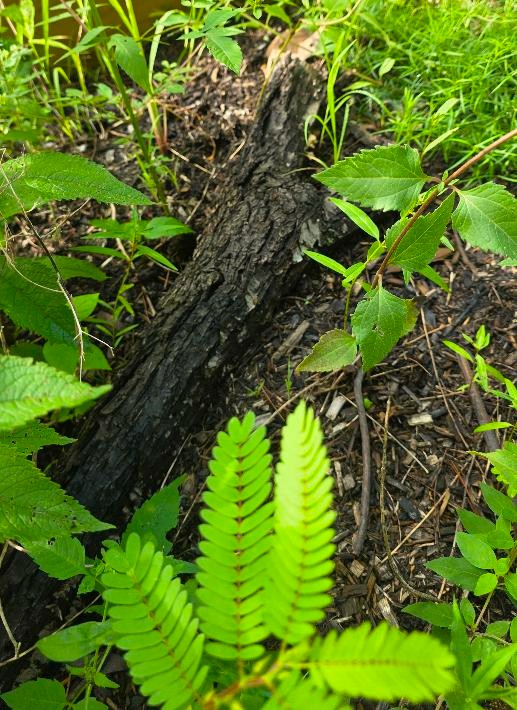
Photo by Joe Sarnicola
🌱 HGCNY Habitat Hints: Extra insights to help your habitat thrive🌱
Want to go deeper on dying trees and snags? Watch HGCNY’s recorded program The Wonderful Life of a Dying Tree with Gillian Martin of the Cavity Conservation Initiative. She explains the habitat value of dead and declining trees, how wildlife uses them, and what to consider before deciding whether a tree can stay as a safe “wildlife tree.”
About the author:
Joe Sarnicola is a writer and native plant gardener based in Auburn, New York, and he is a member of the Habitat Gardening of Central New York Chapter Wild Ones.