Author: Joe Sarnicola
This is a letter I wrote to the Citizen (Auburn’s newspaper) a couple weeks ago. I thought this would be a good place to share it as well.
Over the past few years I have learned that our environment is fragile and even slightly broken. I have also learned that by converting even a small part of our land into a habitat for pollinators and other insects by using native plants and avoiding the use of toxic chemicals and non-native plants, we can contribute to restoring our environment and helping the other living creatures who share the earth with us.
As nice as beautifully maintained lawns or ornamental flower gardens may look, they contribute little to their environment, if anything, and may actually have a negative impact because of the likely use of pesticides, herbicides, and non-native and invasive plants. Pollinators, such as butterflies and bees, not only need sources of food for themselves and their young, but places to breed and places for their offspring to live. Many insects rely on specific plants to survive.
Landscape designer and author Mary Reynolds says flowers and plants should function within the ecosystem where they are. She calls the movement to reintroduce native plants with a purpose an ARK, meaning an Act of Restorative Kindness. Please check out her book, “We are the ARK.” This process will take a bit of study on our part to know which plants are native to our area, what our soil is like, and how much room we have to plant anything, but even a window box can be an ARK.
Excellent information can be found on her website, wearetheark.org, and a local organization that offers information, presentations, and other assistance is Habitat Gardening of Central New York (hgcny.wildones.org). I can also recommend books by Doug Tallamy, especially “Bringing Nature Home.”
Kenyan scientist, Aloo Denish Obiero, said, “Environmental stewardship doesn’t demand perfection; it craves our dedication to making a difference, one mindful choice at a time,”
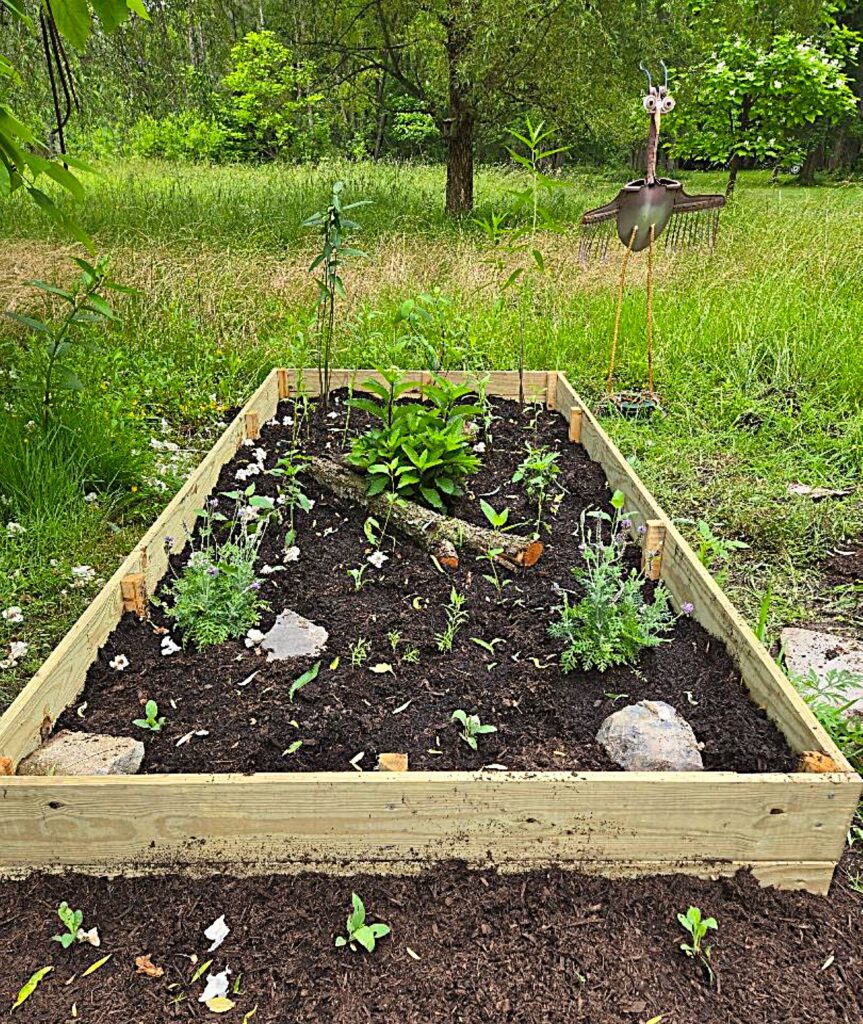
Last year I made my first mindful choice by creating a pollinator garden in my back yard using only native plants. I bought them locally at Go Native Perennials in Skaneateles (www.gonativeperennials.com) and the Butterfly Effect in Geneva (www.butterflyeffectplants.com). Most recently I added two sections where I planted seeds of native plants which I hope will blossom with color and life next year and beyond. As I learn more, I will do more within my time, ability, and budget.
HGCNY Wild Ones note:
The above native nurseries and many more can be found in our Native Plant Shopping Guide.