Author: Joe Sarnicola
When many of us hear the term “keystone” we may think of the wedge stone that locks the other stones of an arch in place, silent movie cops, Pennsylvania (Keystone State), or even a brand of beer. I doubt many people associate keystones with plants. But they should.
Wild Ones promotes the use of native plants in gardens because they provide food, shelter, and nesting sites for insects, birds, and other wildlife that have over many years developed an interdependent relationship with the native plants that they do not have with non-native plants. Among the native plants there are certain trees, shrubs, and flowers that provide an over-sized role in an ecosystem. These are the keystone plants.
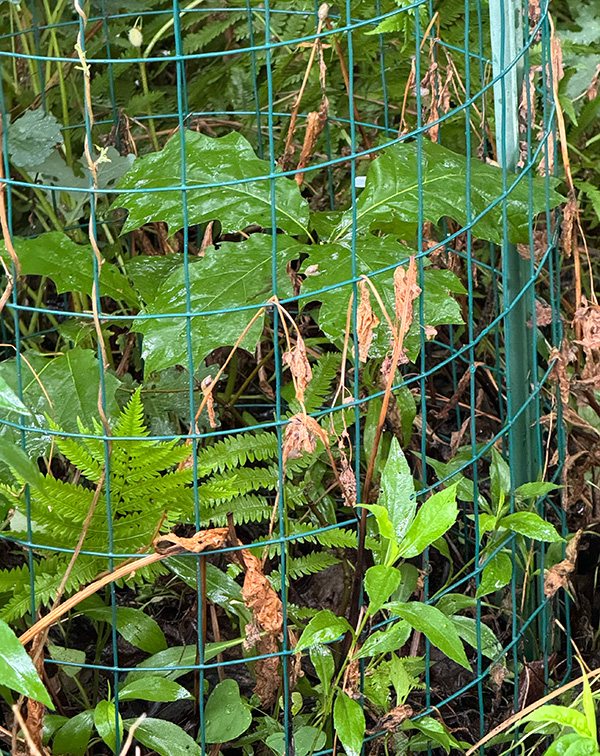
Photo by Janet Allen
In the world of trees, the oak (such as Quercus alba) is the king of keystones. An oak tree can be host to more than 400 species of caterpillar, which in turn become food for birds, and the ones that are not eaten grow to become beautiful butterflies. Squirrels and Blue Jays use the acorns for food, or they bury them where they may possibly sprout into new trees. Influential entomologist Doug Tallamy wrote “The Nature of Oaks: The Rich Ecology of Our Most Essential Native Trees” because he recognized the importance of the oak tree.
Many bees are specialists, which means they only seek out the pollen of specific plants. The bee population has declined by more than 30% just over the past fifteen years due to pesticides, disease, and loss of habitat and the native plants they need for their survival. Want to try to reverse or at least slow down that decline?Plant Stiff Leaf Goldenrod (Solidago rigida) or Blue Wood Aster (Symphyotrichum cordifolium), which each can serve as host to more than 100 species of caterpillars and, together, more than 50 species of bees.
Wild Ones describes keystone plants as being “critical to the food web.” The National Wildlife Federation website has a native plant finder (https://nativeplantfinder.nwf.org/) which can be searched by Zip code, and they publish a free fact sheet about Keystone Native Plants that can be found by searching for keystone native plants and listing your ecoregion.
Wild Ones HGCNY Note: Central New York is in the Eastern Temperate Forests – Ecoregion 8
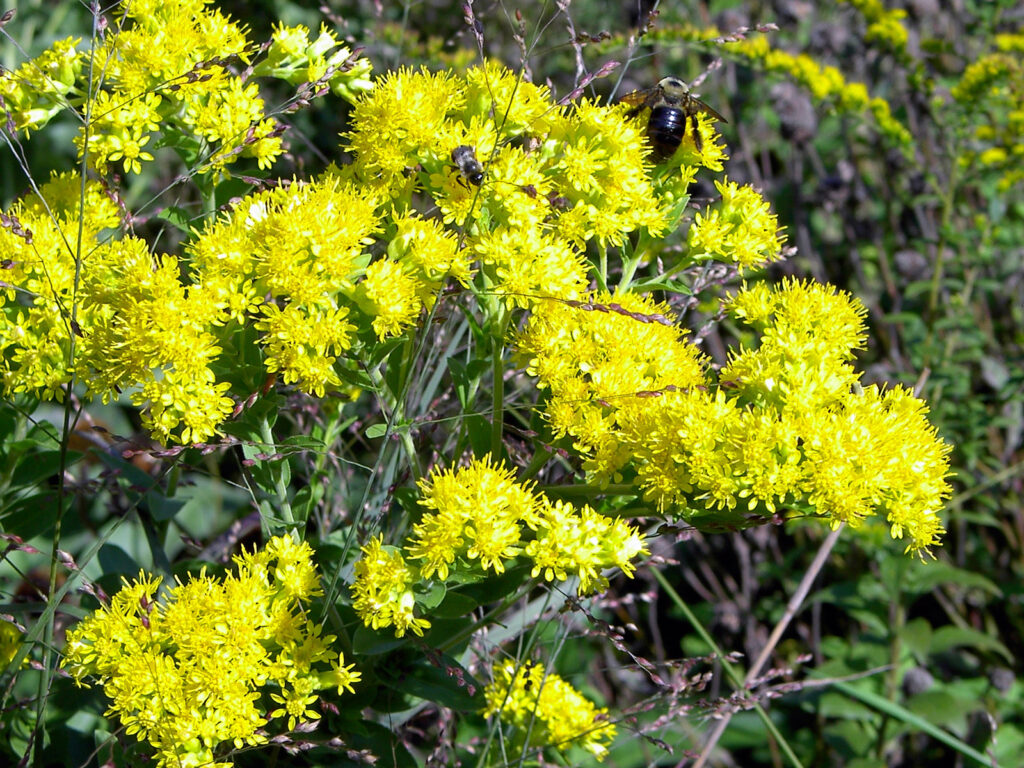
(Stiff-leaved goldenrod)
Photo by Janet Allen
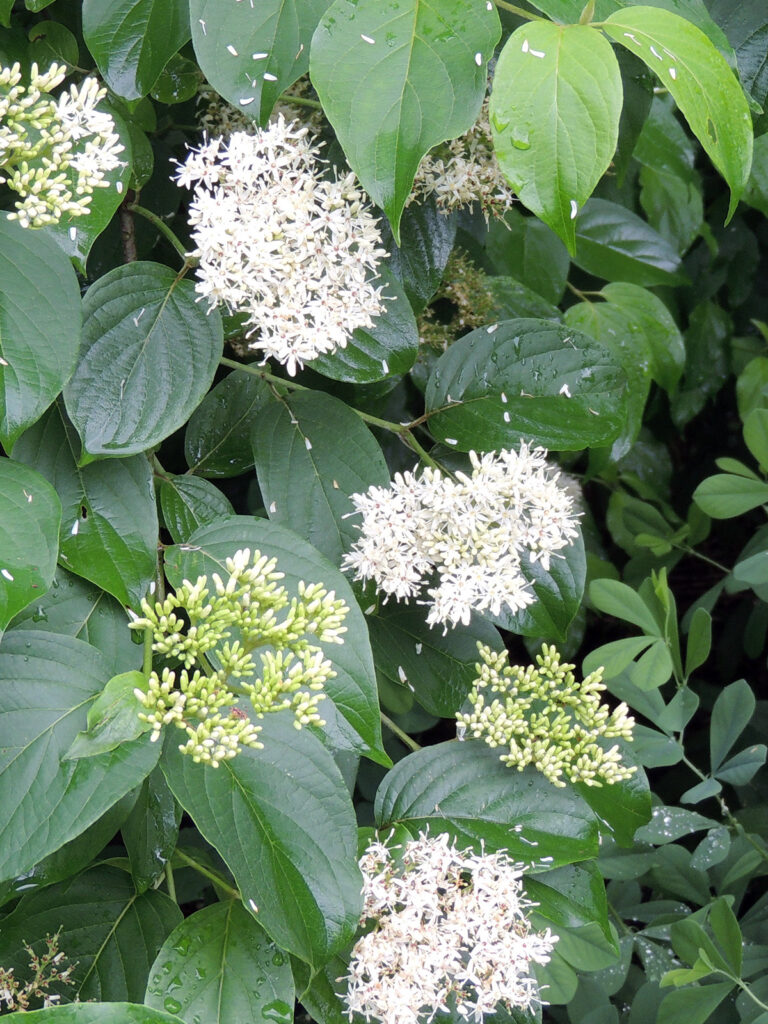
(Silky dogwood)
Photo by Janet Allen
Wild Ones also recommends using the scientific name for plants to ensure buying the right plant and not a cultivar. Cultivars (sometimes referred to as “nativars”) are bred to have certain characteristics, such as size or color or hardiness, but the process of modification may make the plants less useful to wildlife. They usually have names like Granny Smith apples or Denver Daisy Rudbeckia.
Experts recommend using at least 70% of native plants, with a portion of those being keystones which support a disproportionately large number of pollinators and caterpillars, compared with the other plants. There is a phrase that says “all politics is local,” and that same philosophy can be applied to plants as well.
By planting native plants, we can help to build or repair the ecosystems in our area and create beautiful, wildlife-rich gardens.
About the author:
Joe Sarnicola is a writer and native plant gardener based in Auburn, New York, and he is a member of the Habitat Gardening of Central New York Chapter Wild Ones.