Author: Joe Sarnicola
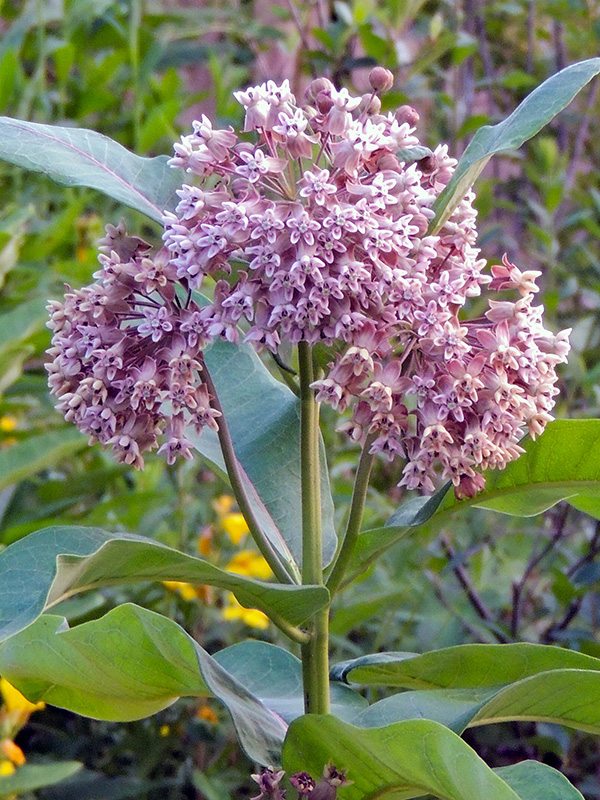
Photo by Janet Allen
Let’s imagine you ask a local gardener what you would need to start a new native plant garden. They tell you to buy a pointed shovel, a pair of heavy-duty gloves, and two Asclepias syriaca. So you write down, “Shovel, gloves, and what?”
Asclepias syriaca is the botanical name for common milkweed. The same plant may have different names in different parts of the country so botanical names are the descriptors we use to identify these plants correctly. For example Monarda fistulosa, is known as bee balm, Oswego tea, and bergamot, depending on where you live.
I don’t remember much from my high school Latin classes, but the first time I heard a botanical name for a plant I was reminded of the old Roadrunner cartoons where the Roadrunner would show up in a freezeframe and a fake Latin name would appear under it like “Velocitus delectibus.” Anyone else remember those?
Let’s take a serious look at these botanical names because they are actually very useful and important. Latin is used as a “lingua franca,” or universal language, because botanists and gardeners around the world can use the same name for the same plant. Botanical names are considered binomials because they are two-part names. The first part is called the genus name, and the second part is called the species epithet. An epithet functions here in the same way an adjective modifies a noun and tells us more about the plant.
Botanical names are italicized and the first letter of the genus name is capitalized. Think of the genus name as the family name. Acer is the genus name for Maple, so adding the species epithet we could find Acer rubrum (red maple) or Acer saccharum (sugar maple). The use of Latin botanical names was first used by Carl Linnaeus, a Swedish botanist, in 1753. He later Latinized his own name to Carolus Linnaeus.
How does this apply to us as native plant gardeners? It helps us determine whether a plant we are considering buying is a straight species, a cultivar, a nativar, or hybrid. Let’s look at each one.
A straight species is a plant that has been open-pollinated, meaning it was pollinated by insects, wind, or water, or it was grown from the seed of such a plant. Straight species provide the greatest range of diversity in your native plant garden, as long as you have considered the amount of sunlight and soil conditions when selecting the plant.

Portrait by Alexander Roslin, 1775
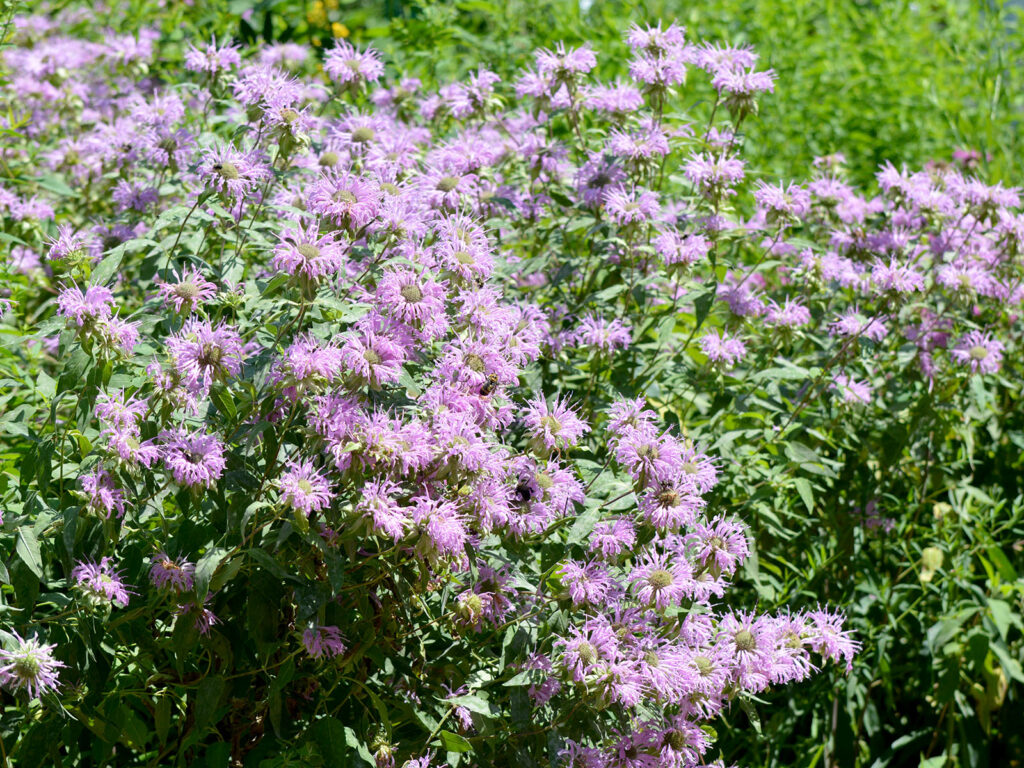
Photo by Janet Allen
A cultivar is a plant that has been bred to produce a certain color, pest resistance, or other trait. Unfortunately, this modification of plants can weaken or eliminate the characteristics that benefit the insects or contribute to the ecosystem. A nativar is a native plant that has been modified the same way.
Cultivars and nativars usually have additional names that go with them. Monarda fistulosa is the bee balm mentioned earlier, but Monarda fistulosa “Jacob Klein” is a cultivar. If you see names like these on a plant, that tells you they are cultivars or nativars.
A hybrid is the result of cross-breeding two different plant species. These plants will usually have an “x” as part of the name. They may be decorative, but they are practically useless in a native plant garden.
Your local chapter of Wild Ones (mine is Habitat Gardening of Central New York; (https://hgcny.wildones.org) should have a list of native plants that includes botanical names and common names on their website. Print it out or write the names of the plants that are native to your area and bring it with you when you shop. If your area has one or more nurseries that sell native plants (your Wild Ones chapter may have a list of those, too!) they are more likely to be straight species that have not been pretreated with pesticides or other chemicals, making them the better place to shop than the big box garden centers, plus you will be supporting local small businesses.
🌱 HGCNY Habitat Hints: Extra insights to help your habitat thrive🌱
🌱Janet Allen, President of Habitat Gardening of Central New York (HGCNY), shares a thoughtful habitat-gardener’s perspective on cultivars, nativars, and why straight species are usually the better choice for supporting local wildlife. Highly recommended reading: OurHabitatGarden.org
🌱Always shop for native plants using their scientific (botanical) names. This helps guarantee you’re getting the straight species best suited for your local ecosystem. Download the HGCNY Native Plant Shopping Guide, which provides scientific names and lists plants currently available at Central New York native nurseries: https://hgcny.wildones.org/projects/shopping/
About the author:
Joe Sarnicola is a writer and native plant gardener based in Auburn, New York, and he is a member of the Habitat Gardening of Central New York Chapter Wild Ones.