Author: Joe Sarnicola
One important aspect of a native plant garden is to create an environment where pollinators can find food, shelter, and a place to raise their offspring. Why is this so important?
Let’s start with pollen, the dust-like material created by the male part of a flower which must be transferred to the female part for reproduction. The transfer of pollen from the male to the female parts of the same plant is called self-pollination, and pollen going from one plant to another is called cross-pollination, which is a more effective method in creating healthy seeds. Many plants have evolved not to be able to self-pollinate to keep their lineage stronger.
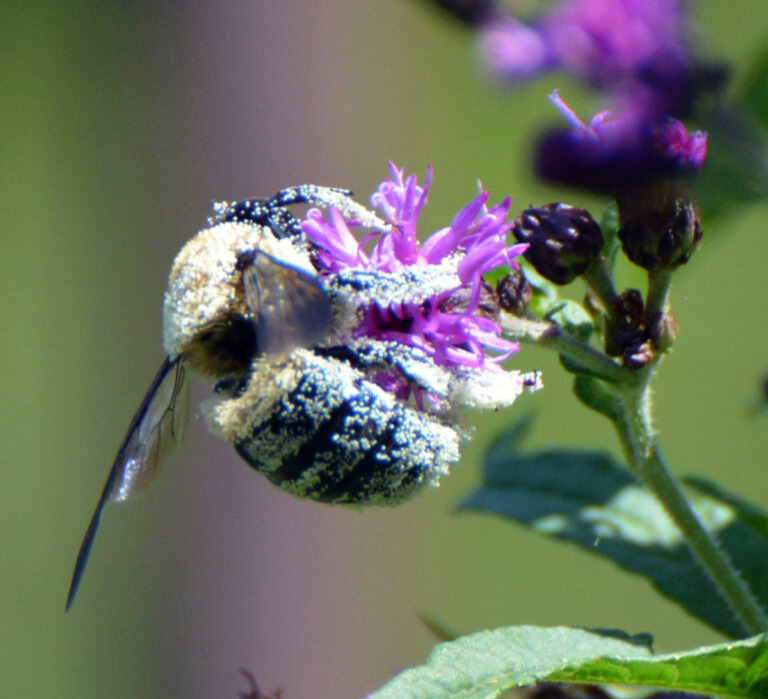
Photo by Janet Allen.
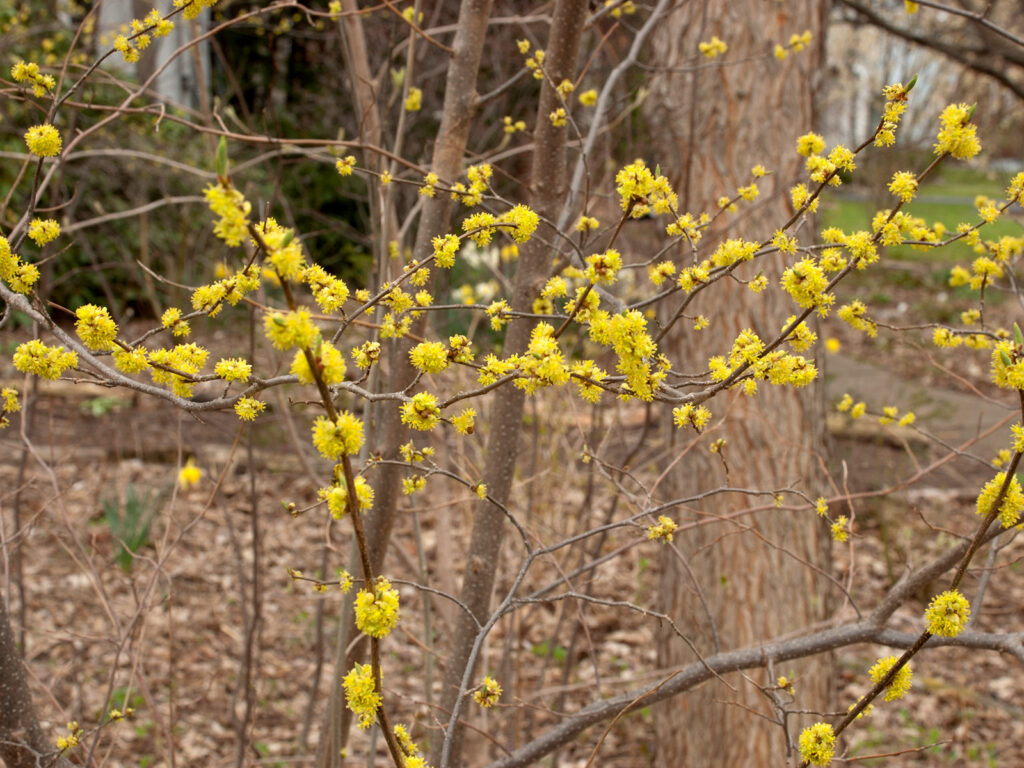
Photo by Janet Allen.
Looking at the flower parts more closely, the male part, the stamen, is made of two components, the anther, which produces the pollen at the top of the stamen, and the filament, which is stalk-like and supports the anther. The female part, the pistil, has three components: the stigma, the sticky top section which catches the pollen, the style, a tube-like structure that joins the stigma to the ovary, the third part, which is where the ovules can be fertilized by the pollen.
Some plants, called monoecious, have some flowers with male parts and others with female parts. Dioecious plants have either male or female flower parts, but not both. Either way, the pollen has to travel from one flower to another, whether on the same or a different plant. Although pollen is released into the air and dispersed by the wind (ask any allergy sufferer), this is not a very efficient way for the pollen to reach its intended destination. Enter the pollinators, which can include bees, butterflies, moths, and beetles, but for this article I am going to concentrate on bees.
In native plant gardens the plants and wildlife have evolved together, and one result of that co-evolution is that the plants have developed ways to attract pollinators. Certain colored flowers or specific scents are two techniques in this relationship that plants use. Even the shape or design of flower petals can attract or guide specific insects. As a benefit to the pollinator for facilitating their reproduction the plants offer nectar or pollen as food.
When bees visit the plants, they are most likely looking for food, although occasionally they can find potential mates who are visiting the same flower. When they land on the flowers, pollen sticks to their bodies and some of that pollen falls off as they travel to other flowers. If the pollen is brought to a female flower, reproduction can begin, producing seeds.
This process is important for the survival of the plant. A plant may bloom for many years but if it is not being pollinated then eventually the plant could die out, without anyone realizing there had been a problem, namely a lack of pollinators.
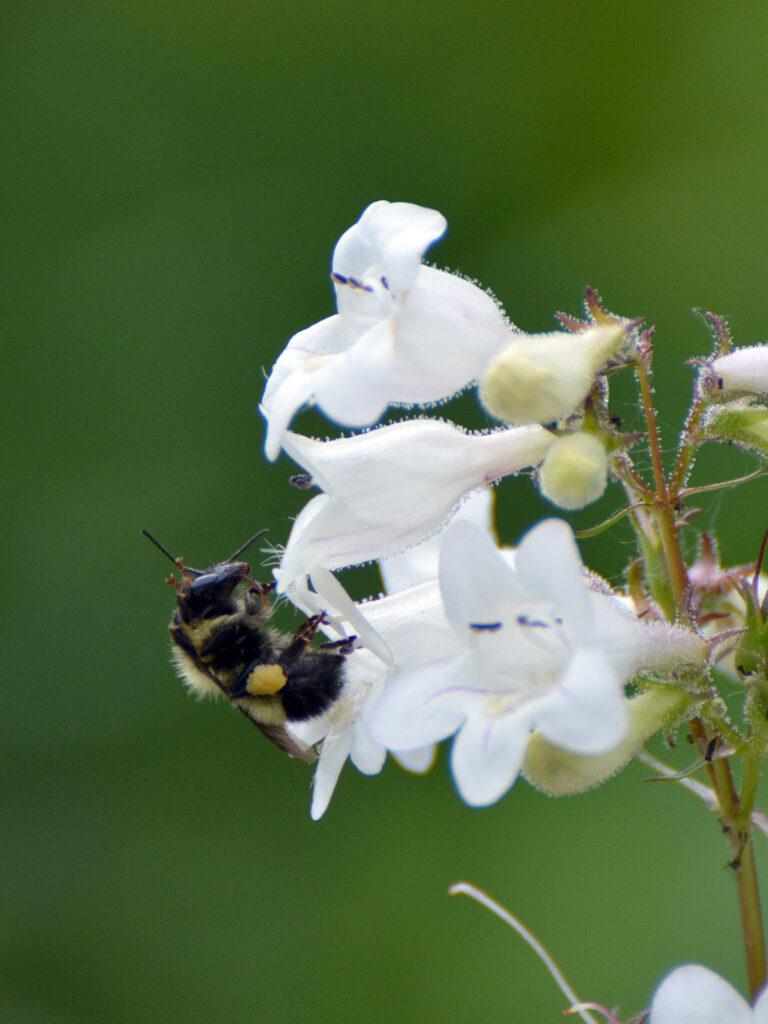
Photo by Janet Allen.
Bees can be solitary or social, specialists or generalists. Although it is not unusual for us to see a beehive hosting many bees, most bees live alone. A generalist bee may gather pollen or nectar from several different flowers while a specialist bee relies on a single plant genus for food.
Bees can travel from their nest a short distance up to the length of a football field, depending on their size, with a few exceptions. Larger bees can travel the farthest. It is important to keep this concept in mind while planting a garden designed to attract pollinators. If we plant flowers within a bee’s flying range, they can find food for themselves and their offspring much easier. It also conserves the bee’s energy and saves time gathering food.
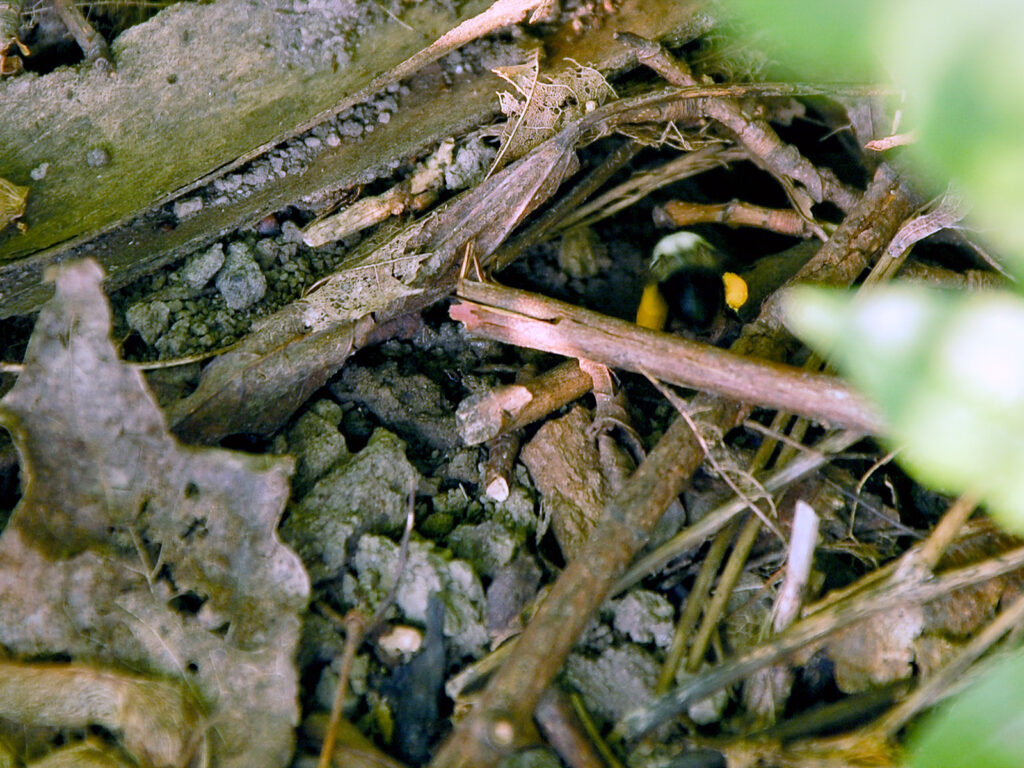
Photo by Janet Allen.
Tunnel-nesting bees use empty beetle burrows in deadwood or hollow spots and dry reeds or similar places as their homes. Ground-nesting bees dig into bare ground or sand, so we should not cover everything with mulch or plants, and leave some bare spots for the bees.
Although honeybees get a lot of positive publicity because they produce honey, they are not native to the United States, and they are not as efficient in pollination as native bees. Unlike the honeybees, our native plants have evolved alongside our native plants, so nature has designed them to be compatible.
As you maintain or add to your garden, remember that bees need places to nest and plants that can be used for food. Leaving a few open spots for ground-nesters and choosing flowers that provide pollen and nectar will help support them throughout the season.
🌱 HGCNY Habitat Hints: Extra insights to help your habitat thrive🌱
Happy Pollinator Week! Ready to support our native bees and other pollinators?
Native plants are the foundation of a healthy pollinator garden — they provide the right nectar, pollen, and host plants that our native bees and other pollinators have evolved with over thousands of years.
By choosing natives, you create a thriving habitat that supports everything from ground-nesting bumblebees to colorful butterflies and songbirds.
P.S. Need help finding the right plants? Check out the HGCNY Shopping Guide for local nurseries, recommended species for Central New York, and tips on what to plant for maximum pollinator benefit: 👉 https://hgcny.wildones.org/projects/shopping/
Happy planting, and thank you for helping create healthier habitats in Central New York! 🌿🐝
About the author:
Joe Sarnicola is a writer and native plant gardener based in Auburn, New York, and he is a member of the Habitat Gardening of Central New York Chapter Wild Ones.